Add Row
Add Element
cropper
update
Jacks Commercial Real Estate, Inc.
Logo design for Jacks Commercial Real Estate, Inc.
update
Add Element
  • Home
  • Categories
    • Office Real Estate
    • Retail Real Estate
    • Industrial Real Estate
    • Hospitality & Multifamily
    • Real Estate Market Trends
    • Commercial Real Estate Investment & Development
    • Sustainability & Smart Buildings
    • Leasing Strategies & Tenant Relations
    • Property Management Best Practices
    • Other News
September 15.2025
2 Minutes Read

Nuveen Invests $21M in Jacksonville: What It Means for Industrial Real Estate

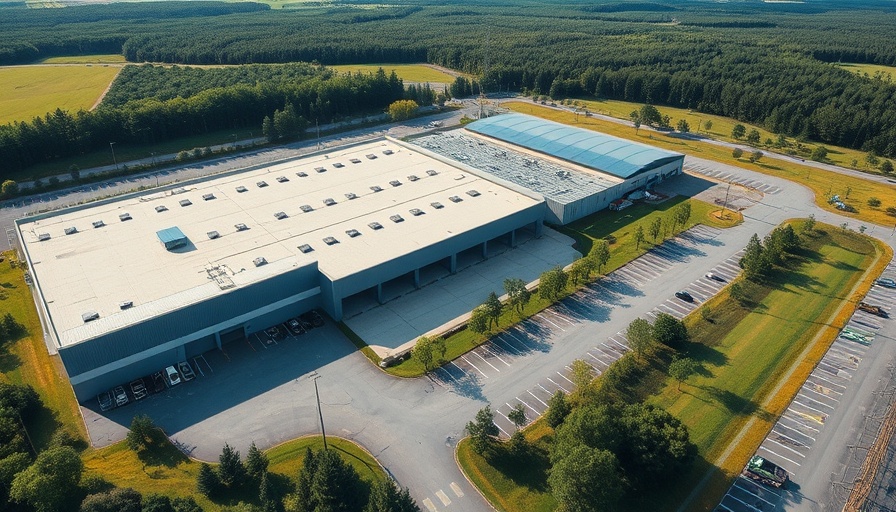
Aerial view of Jacksonville industrial real estate by Nuveen Investment.

Nuveen's Strategic Acquisition in Jacksonville's Industrial Sector

In a notable transaction indicative of the industrial real estate market's resilience, Nuveen, a global investment manager, has acquired a significant industrial property in Jacksonville, Florida, for approximately $21.1 million. This acquisition expands Nuveen's footprint in a region poised for continued growth in industrial space demand.

The Significance of Jacksonville's Market Trends

According to recent data from Cushman & Wakefield, Jacksonville has seen its industrial vacancy rate increase to 7.6 percent year-over-year as of June, representing a rise of 270 basis points. This spike coincides with a wave of new developments, as over half of the newly completed industrial properties in the second quarter remained vacant. Despite these challenges, rents have held steady at around $7.84 per square foot, signaling persistent demand even as supply increases.

What This Acquisition Means for Investors

Nuveen's investment comes at a time when many investors are taking a cautious approach. The rise in vacancy rates could indicate an over-saturation in the market, yet full leasing by reliable tenants, such as healthcare distribution giant Henry Schein at the newly purchased facility, can be seen as a mitigating factor. Investors are likely to analyze such acquisitions closely to determine their risk-to-reward ratios.

Future Prospects for Industrial Real Estate

With over 4.2 million square feet of space currently under construction in the Jacksonville area, experts suggest that the market may well adapt to this rising supply with a healthy demand, especially in sectors like healthcare and logistics that have seen growth during recent economic fluctuations. Given that Nuveen already manages a substantial $34 billion in industrial assets, their commitment to this market could further drive innovation and improvements in industrial property management practices.

Conclusion: Keeping a Close Eye on Jacksonville

For those invested or interested in the commercial real estate sector, understanding Jacksonville's evolving landscape is vital. While the market presents challenges, the strategic moves by firms like Nuveen suggest that opportunities remain. As the industrial sector evolves with new demands and conditions, being informed is essential for making astute investment decisions.

Industrial Real Estate

Write A Comment

*
*
Related Posts All Posts
03.01.2026

Canada’s Industrial Real Estate: Divergent Trends Reveal Opportunities and Risks

Update The Uneven Landscape of Canada’s Industrial Real Estate The Canadian industrial real estate market is mirroring the nation's economic diversity, with various regions showcasing markedly different performance metrics. According to the latest report from Royal LePage, while certain areas are grappling with trade disruptions, others appear to be weathering the storms more effectively, resulting in contrasting trajectories across the country. Analyzing Regional Disparities Recent trends indicate that the Greater Toronto Area is one of the regions witnessing unfavorable shifts, with asking rents falling 4.9% in 2025 to an average of $21.88 per square foot. Vacancy rates also spiked, rising to 3.4% from 2.9% the previous year. In contrast, cities like Calgary are seeing unique dynamics, where rising rents coexist with increasing vacancy rates, suggesting an unexpected resilience amid broader market uncertainties. Trade Disruptions and Their Ripple Effects Trade issues remain a critical concern for Canada's industrial sector, impacting leasing demand and supply chains. The ongoing concerns surrounding the Canada-United States-Mexico Agreement (CUSMA) and its formal review scheduled for mid-2026 highlight the interconnectedness of trade stability and market health. Experts contend that the continuation of the North American free trade agreement is crucial for the sector’s stability. While trade dilemmas loom, the return of nearshoring as a strategic pivot could present opportunities for growth. Future Predictions: Stabilization Ahead Looking into 2026, forecasts suggest a potential stabilization in the industrial real estate market, with national vacancy rates projected to plateau around 5.5%. Economic factors like easing interest rates and manageable inflation levels are likely to foster an environment conducive to gradual recovery across all asset types. As the nation braces for recovery, the focus on flight-to-quality leasing—favoring premium properties—will likely become more pronounced, impacting tenant strategies moving forward. Addressing the Challenges Ahead For stakeholders in Canada's industrial real estate, understanding these disparities and embracing the evolving market landscape will be integral. The resilience shown by certain markets against adverse conditions could guide strategic investments and operational policies in the coming years, opening the door for selective growth and stabilization.

02.28.2026

Inside MP Materials' $1.25B Investment in Rare Earth Magnet Manufacturing Hub

Update MP Materials Investment to Transform Industry In a significant boost for American manufacturing, MP Materials has announced plans to invest $1.25 billion in a new rare earth magnet manufacturing facility in Northlake, Texas. Named 10X, this massive project highlights the increasing focus on domestic production to reduce reliance on foreign supply chains, particularly those controlled by China. A Bright Future for Rare Earth Production The 10X manufacturing hub will span over 120 acres at the AllianceTexas campus, with construction scheduled to commence imminently. Once operational in 2028, the facility is projected to create around 1,500 jobs and boost production capacity to approximately 10,000 metric tons of rare earth magnets annually. These magnets are vital components in numerous sectors, including defense, robotics, and semiconductor fabrication. Strategic Significance in National Security This investment is particularly crucial as the U.S. seeks to bolster national security amid growing concerns regarding reliance on Chinese supplies. The partnership with the U.S. Department of Defense signifies a commitment to achieving rare earth independence, marking a historic shift in the nation’s industrial landscape. Support from Local Government To facilitate this project, local and state entities have approved a substantial incentive package worth $200 million, providing the necessary support to ensure the facility's successful launch and ongoing operations. This collaboration showcases a concerted effort to strengthen economic development and job creation within the Texan community. The Growing Need for Rare Earth Magnets Rare earth magnets play an essential role in modern technology, making them indispensable in various applications ranging from electric vehicles to consumer electronics. As global demand continues to rise, MP Materials’ initiative to produce these components domestically aligns perfectly with current market trends. Conclusion: Embracing Economic Change MP Materials' development plans underscore a proactive approach to manufacturing that not only aims to meet domestic needs but also positions the United States to regain a competitive edge in the global market. It’s a bold step towards a more self-reliant future for American technology and manufacturing.

02.26.2026

Philadelphia's Industrial Market Growth: Delivering 13.6 Million Sq Ft in 2025

Update Philadelphia’s Industrial Sector in 2025: A Year of Growth In 2025, Philadelphia's industrial market experienced impressive growth, with nearly 13.6 million square feet of new industrial space delivered—significantly surpassing the national average of 1.5 percent, according to Yardi Matrix. This remarkable increase positions Philadelphia as a notable player in the industrial landscape, only trailing behind markets like Phoenix, which delivered 18 million square feet. However, the construction activity reflects a more cautious approach from developers, with construction starts dropping sharply—from 11.5 million square feet the previous year to just 2.7 million in 2025. Current Trends Influence Future Prospects The ongoing developments, including the notable Savage Road facility in Northampton, PA, which is set to provide 357,840 square feet of Class A industrial space, reflect both opportunity and caution in the sector. With developers focusing more on delivering quality over quantity, the significant amount of space currently under construction, around 4.9 million square feet across 18 properties, serves to bolster the market's position, even if it lags behind other metropolitan areas like Chicago and Phoenix. Investment on the Rise Amid Market Fluctuations Investment activity too remained robust, recording nearly $1.5 billion in industrial transactions throughout the year. The resilience in investment reflects confidence in the market, despite an increase in vacancy rates, which hit 9.2 percent for the region by year-end—higher than the previous cycle but still below the national average. This paradox of rising vacancies occurring amid significant supply growth hints at shifting dynamics that investors and stakeholders must navigate moving forward. Looking Ahead: Insights and Predictions The growth seen in 2025 has established a solid foundation for Philadelphia’s industrial sector, but the dip in construction starts signals a potential correction. As economic conditions shift, stakeholders will need to adapt to the changing landscape, focusing on strategic investments and operational efficiencies. The continued growth in industrial space suggests confidence in the sector, but it will be critical to monitor adjustments in talent acquisition and resource allocation as the market evolves.

Terms of Service

Privacy Policy

Core Modal Title

Sorry, no results found

You Might Find These Articles Interesting

T
Please Check Your Email
We Will Be Following Up Shortly
*
*
*