Add Row
Add Element
cropper
update
Jacks Commercial Real Estate, Inc.
Logo design for Jacks Commercial Real Estate, Inc.
update
Add Element
  • Home
  • Categories
    • Office Real Estate
    • Retail Real Estate
    • Industrial Real Estate
    • Hospitality & Multifamily
    • Real Estate Market Trends
    • Commercial Real Estate Investment & Development
    • Sustainability & Smart Buildings
    • Leasing Strategies & Tenant Relations
    • Property Management Best Practices
    • Other News
September 08.2025
2 Minutes Read

Trammell Crow and CBRE Japan Launch New Industrial Park in Atlanta

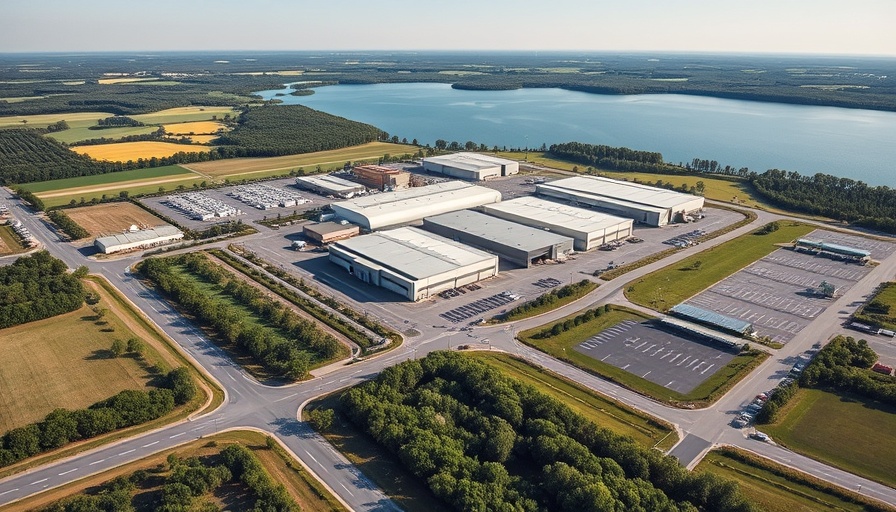
Aerial view of Atlanta Industrial Park Development near water.

Trammell Crow and CBRE Japan Join Forces for New Industrial Park

A notable collaboration in the real estate development sector has emerged as Trammell Crow Company partners with a consortium led by CBRE Japan to initiate the construction of the Buford Creek Business Center in Buford, Georgia. This significant project will encompass three state-of-the-art industrial buildings totaling a substantial 686,400 square feet.

Project Specs: What to Expect in Buford

The development will feature:

  • Building 100: A massive 349,440-square-foot cross-dock warehouse designed with a high 40-foot clear height and ample parking, including space for 64 trailers.
  • Buildings 200 and 300: Each building offers 168,400 square feet with a 36-foot clear height, catering to diverse industrial needs.

This project is on track for completion in the third quarter of 2026 and is strategically located at the junction of Lanier Islands Parkway and Big Creek Road, with accessibility to major highways and proximity to Atlanta International Airport.

Atlanta’s Booming Industrial Market

The Atlanta industrial market remains vibrant. Recent data shows that industrial development in the region has doubled year-over-year, boasting about 9.5 million square feet of industrial space currently under construction. The average sale price in Atlanta hit $143.38 per square foot, highlighting the increasing demand for industrial real estate.

Implications for Investors and Businesses

As the demand continues to rise, investors and companies looking for opportunities in industrial real estate should closely monitor developments like the Buford Creek Business Center. These projects not only provide much-needed space but also signify the economic growth potential in the Atlanta metro area.

Commercial Real Estate Investment & Development

Write A Comment

*
*
Related Posts All Posts
02.28.2026

Decoding the Mixed Signals in Miami's Office Market Dynamics for 2025

Update Mixed Signals in Miami's Office Market: A Closer Look As we reflect on 2025, Miami’s office market has exhibited a mix of strong fundamentals and areas of concern. While the investment pace significantly softened, showing a decline from the record highs of 2024, pricing remained resilient. Office properties in Miami are maintaining premium prices, ranking among the highest in the nation despite the overall drop in investment activity. This juxtaposition raises critical questions about long-term trends and investor confidence in a post-pandemic landscape. Construction Activity Under Scrutiny Developer enthusiasm persists, albeit with caution. By the end of 2025, about 1.9 million square feet of office space was under construction across 16 properties, demonstrating Miami's commitment to development. However, completions fell steeply, marking a 38.6% decline year-over-year. This shift in dynamics reflects both the challenges faced by developers and the high stakes involved in the competitive real estate market. Vacancy Rates: A Double-Edged Sword Interestingly, the vacancy rate in Miami dropped to 13.9%, ranking it second only to Manhattan, which bodes well for the city’s rental pricing power. With a tightening rental market, Miami is well-positioned to command high rent prices that have reached an average of $55.39 per square foot - slightly below Manhattan yet indicative of a thriving market amidst broader economic challenges. The resilience in rental pricing demonstrates both the demand for office space and the strategic positioning of developers amidst fluctuating market conditions. Sales Activity: A Cautionary Trend Despite overall stability in pricing, Miami’s office investment activity fell to $771 million, placing it at the bottom among its peer cities. This is a stark contrast to the previous year, showcasing a decline in investor appetite. Noteworthy transactions include the sale of the Sabadell Financial Center for $274.4 million, underscoring that while prices remain high, the volume of sales has not kept pace. Such trends compel us to consider whether this represents a temporary setback or a recalibration of market dynamics as investors adapt to the evolving economic landscape. Looking Ahead: What Do These Trends Mean? As we venture further into 2026, how will these mixed signals influence Miami’s office market trajectory? Will the steady construction mitigate the slowdown in investment, or will higher vacancy rates dampen future rental increases? Investors, developers, and property managers must remain agile, adapting strategies to leverage the strengths and mitigate the weaknesses evident in this year’s performance. Understanding the nuances of these market shifts will empower stakeholders to make informed decisions, ensuring they remain competitive as Miami continues to grow as a premier destination for business and commerce.

02.27.2026

Unlocking Property Value: Innovative Ways Without Spending Money

Update Unlocking Value Without Spending a Dime Enhancing the value of a property doesn't always have to mean heavy investments. Many real estate investors have found that strategically improving a property's perceived value is possible without opening their wallets. This approach can be especially beneficial and practical for new homeowners or real estate enthusiast looking to maximize their investment without incurring debt. Simple Steps to Boost Perception One effective method to increase property value is through a clean and decluttered space. A tidy environment not only looks appealing but also allows potential buyers to visualize the home as theirs. Angela Medley emphasizes that improving curb appeal—like maintaining a well-kept lawn or freshening up the entrance—can boost interest in a property instantly. Creative Value-Adding Techniques Additionally, offering potential buyers unique features can enhance a property's value without costly renovations. For example, maintaining a neat garden or implementing energy-efficient features such as LED lighting can draw buyers’ attention. Even small updates like refreshing door hardware or light fixtures can make a significant difference in how the property is perceived. Market Trends and Future Predictions With the continuous evolution of the real estate market, understanding trends can offer an advantage. Properties that incorporate sustainability—like smart technology and energy-efficient appliances—become attractive to today’s eco-conscious buyers. According to a study by Bankrate, buyers are increasingly looking for homes that reduce their environmental footprint while saving on utility costs. Achieving Big Impacts Through Minimal Investment Ultimately, the goal is to convey a sense of home and potential without breaking the bank. Successful property valuation hinges on making strategic choices that resonate with buyers. In today's market, emphasizing cleanliness, appealing aesthetics, and innovative energy practices can remarkably improve a home's perceived value.

02.26.2026

Why Proper Ventilation Matter: Is a Range Hood Necessary for Your Space?

Update Understanding the Importance of Range Hoods in Commercial Spaces When planning renovations or upgrades in commercial kitchens, one often overlooked aspect is ventilation—specifically, the necessity of a range hood. While the spotlight typically shines on prominent features like countertops and appliances, the reality is that a properly functioning range hood can be a game-changer for both safety and efficiency. The Role of Range Hoods in Kitchen Safety Range hoods serve a critical function by eliminating smoke, steam, grease particles, and even harmful combustion byproducts from gas stoves. This is particularly significant in commercial settings, where the volume of cooking can rapidly lead to airborne contaminants. As noted by industry experts, mechanical ventilation is not just recommended; it is often a requirement under the International Residential Code, which offers guidance to many local jurisdictions. Navigating Building Codes: Is a Range Hood Required? Many commercial kitchen operators often ask whether a range hood is truly necessary according to building codes. The short answer is yes—most codes stipulate that kitchens must have some form of mechanical ventilation. While the code does not exclusively mandate a range hood, it requires effective systems that can efficiently vent or recirculate air. Gas Stoves and the Imperative for Proper Ventilation For those using gas stoves, the conversation around ventilation becomes even more pressing. Gas appliances release combustion byproducts that recirculating systems simply cannot handle. The risks are significant; inadequate ventilation can lead to lingering indoor pollutants, increased humidity, and fire hazards. In fact, proper hood installation not only contributes to better air quality but can also impact home inspections—a crucial factor for potential buyers or renters in the commercial real estate sector. Deciding Between Ducted and Ductless Options When choosing the right ventilation system, understanding the differences between ducted and ductless range hoods is essential. A ducted range hood exhausts air directly outside, making it more effective in removing heat and contaminants. In contrast, ductless hoods recirculate air through filters, which might not adequately address the unique challenges faced in commercial environments, particularly with gas stoves. Conclusion: Don’t Ignore Ventilation! For individuals and companies considering a new lease or purchase of commercial space, the choice surrounding range hoods is more than just a cost decision; it is a fundamental aspect of creating a safe and efficient cooking environment. Proper ventilation is essential not only for compliance with building codes but also for ensuring the long-term health of both the property and its occupants.

Terms of Service

Privacy Policy

Core Modal Title

Sorry, no results found

You Might Find These Articles Interesting

T
Please Check Your Email
We Will Be Following Up Shortly
*
*
*